projects :: map
These projects exist now. They are the first parts of the platform. The projects connect in three branches: listen, decide and broadcast.
PERMASOFTWARE ASSEMBLY
|
+-------------------------------------------------+
|                                                 |
PERMASOFTWARE ASSEMBLY
|
+-- // listen
|   ||   +-- AudioMoth scripts
|   |     Scripts for field recordings from
|   |     AudioMoth recorders. They find sound
|   |     events, calculate acoustic indices and
|   |     make a seasonal calendar. All
|   |     processing is local, with no cloud.
|   |     runs on :: a laptop, Bash, Python,
|   |     ffmpeg
|   |     >> bioacustic-scripts
|   |     >> audiomoth-scripts
|   |     -> BiocracyEngine
|   ||   +-- SoundWalk :: DerivaSonora
|   |     A phone app for sound walks. Record
|   |     sounds with their location, add notes
|   |     and listen again on a map. It works
|   |     offline: no account, no server, no
|   |     tracking.
|   |     runs on :: Android phones, browser
|   |     >> biomapp.vercel.app
|   |     >> code not public yet
|   |     -> BiocracyEngine
|   ||   `-- BiocracyEngine
|         Live sound and image instrument:
|         forest sounds, a blockchain stream and
|         a multispecies parliament.
|         >> code
||+-- // decide
|   ||   +-- KLAP :: Klimat Action Protocol
|   |     A free tool for group decisions. One
|   |     person writes a claim. Other people
|   |     add reasons: because, but, however.
|   |     The tool shows where the group agrees.
|   |     runs on :: Django, Docker, your own
|   |     server
|   |     >> klap.altred.xyz :: code
|   |     >> based on arguman.org
|   ||   `-- DIAP
|         Design for a community DAO for land
|         governance. It uses low-energy
|         blockchains.
|         >> code
|         -> BiocracyEngine
||
+-- // broadcast
|   ||   +-- Telegram group
|   |     -> LiquidIce
|   |     <-> iScream (IRC)
|   ||   +-- LiquidIce
|   |     A Telegram bot for a group. Members
|   |     send photos, texts, audio and video.
|   |     The bot makes a website archive and a
|   |     radio stream. It keeps a copy on
|   |     archive.org.
|   |     runs on :: Raspberry Pi 3B+,
|   |     Liquidsoap
|   |     >> code not public yet
|   |     >> first version Telegram2Icecast
|   |     -> Icecast stream
|   ||   +-- iScream
|   |     Go on air from a phone browser. You do
|   |     not need an app or an account. The
|   |     server keeps no audio and no access
|   |     logs. A bridge connects the IRC chat
|   |     and the Telegram group.
|   |     runs on :: Node, ffmpeg, Ergo IRC
|   |     >> reporta.altred.xyz
|   |     >> code not public yet
|   |     -> Icecast stream
|   ||   +-- Icecast stream
|   |     -> Radiolibre
|   ||   `-- Radiolibre
|         A community radio on one small server.
|         Icecast sends the audio and a static
|         web player receives it. Listeners do
|         not need an account.
|         runs on :: one VPS, Icecast, nginx
|         >> radiolibre.altred.xyz :: code
|||
|
|
|
|
|
|
|
|
|
|
+------------------------+------------------------+
                         |
                         `.. next
                               Reticulum · Telegram bots · local AI
`.. next
Reticulum · Telegram bots · local AI
next
The next step is a network that does not need the internet or big companies.
- Reticulum. A network stack for mesh networks. It works over LoRa radio, packet radio, Wi-Fi and the internet. Groups send messages without a central server.
- Telegram. Many groups use Telegram now. Bots stay the simple front door. Later, a bridge connects Telegram and Reticulum.
- Local AI. Small models run on the group's own hardware. Examples: speech-to-text for radio archives, summaries of KLAP debates. No data goes to a cloud.
people
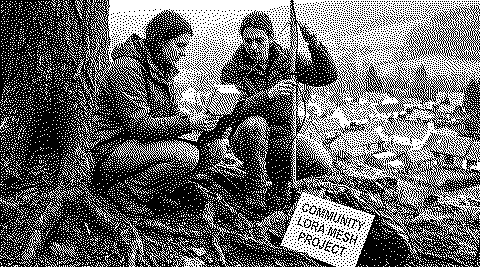
Alejandro Duque Jaramillo and Gonzague Rebetez started the Permasoftware Assembly. It is an open community. People from all parts of the world can join: people who share the principles below and who care about nature.
- Alejandro Duque Jaramillo :: coordination. Swiss–Colombian artist. Linux and cultural management. Developer of KLAP and Radiolibre.
- Gonzague Rebetez :: AI advisor. New-media artist in Biel/Bienne. Co-founder of the art/science collective WÆXE.
- Creative Climate Changemakers Switzerland 2026 :: seed grant. Announcement by Stiftung Mercator Schweiz, 13 July 2026.
Join. Open an issue on GitHub. Tell us about your project and your software needs.
principles
The Permasoftware Assembly is an open platform. Low-footprint software is simple, durable, energy-light and repairable. Six principles guide each project:
- Simple. Use few parts and few dependencies.
- Durable. Make tools that work for many years.
- Energy-light. Use old hardware and small servers.
- Repairable. Publish the code. Write short instructions.
- Local-first. Keep the data with the group. Do not track people.
- Critical AI. Use AI only when it helps the group. Sometimes the better choice is no AI.